News
第34回環境化学討論会にて発表しました
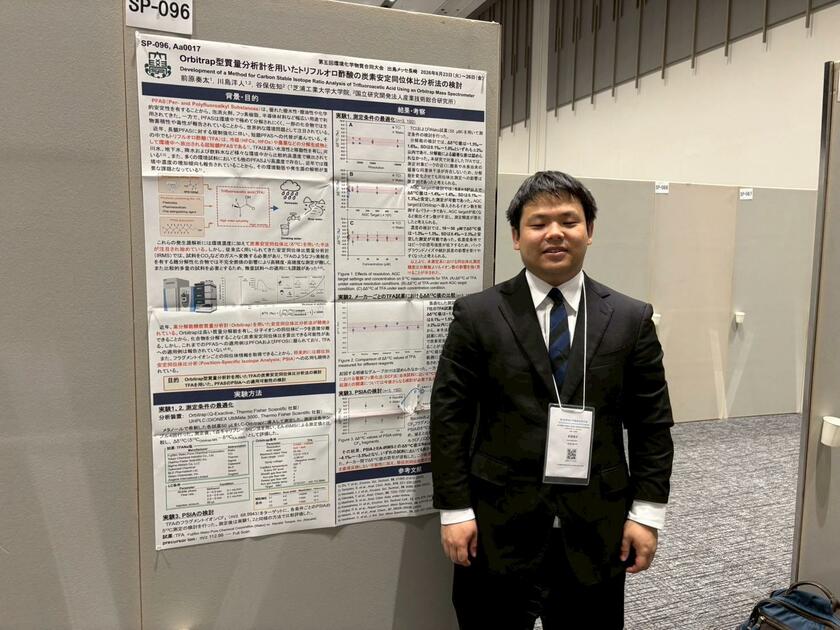
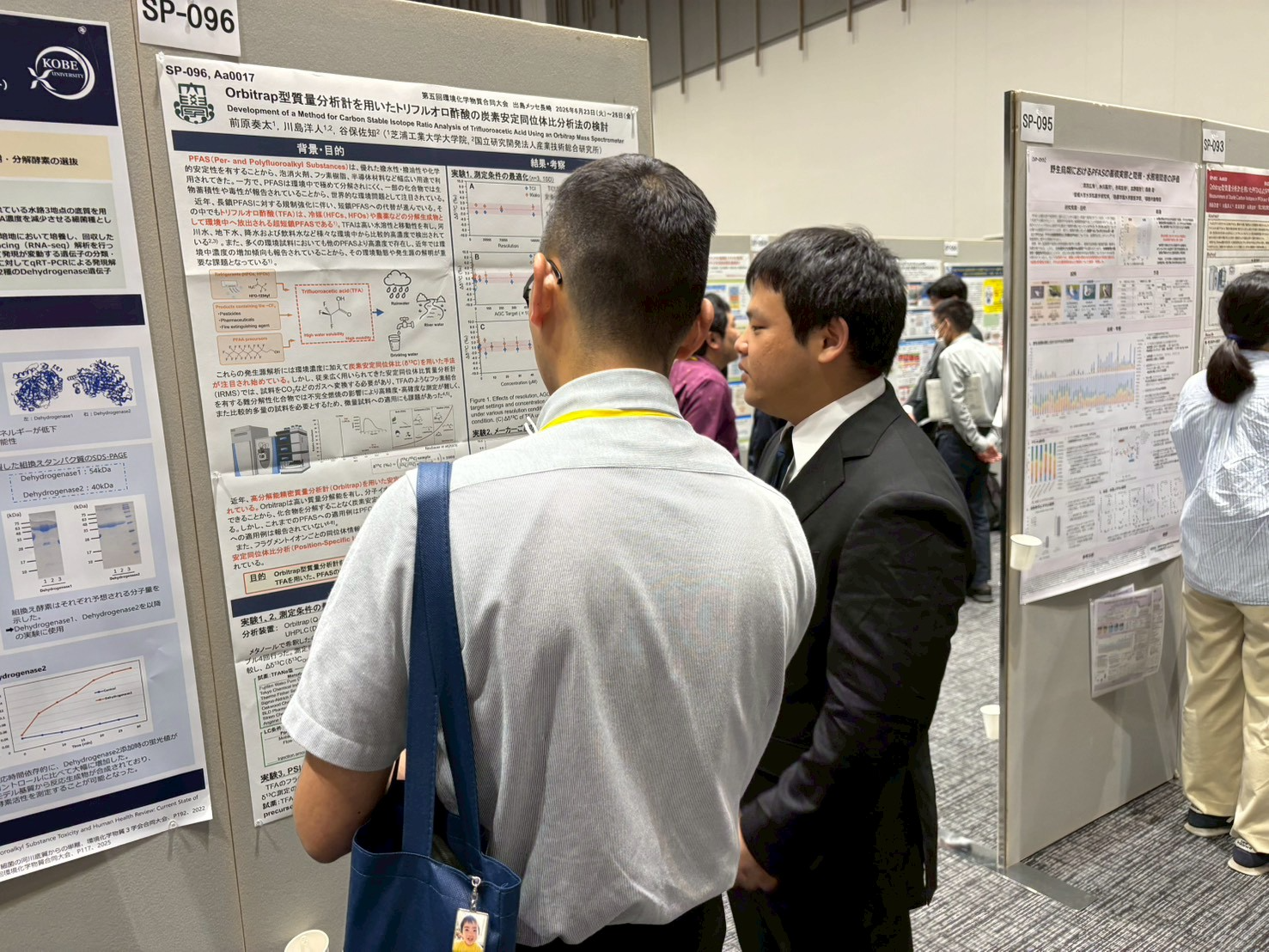
From June 23 to 26, 2026, Momoka Sudo, a doctoral student, and Sota Maehara, a master's student, both from the Department of Systems Engineering and Science, Graduate School of Science and Engineering, presented their research at the 34th Symposium on Environmental Chemistry, held at Dejima Messe Nagasaki.
Comment from Momoka Sudo
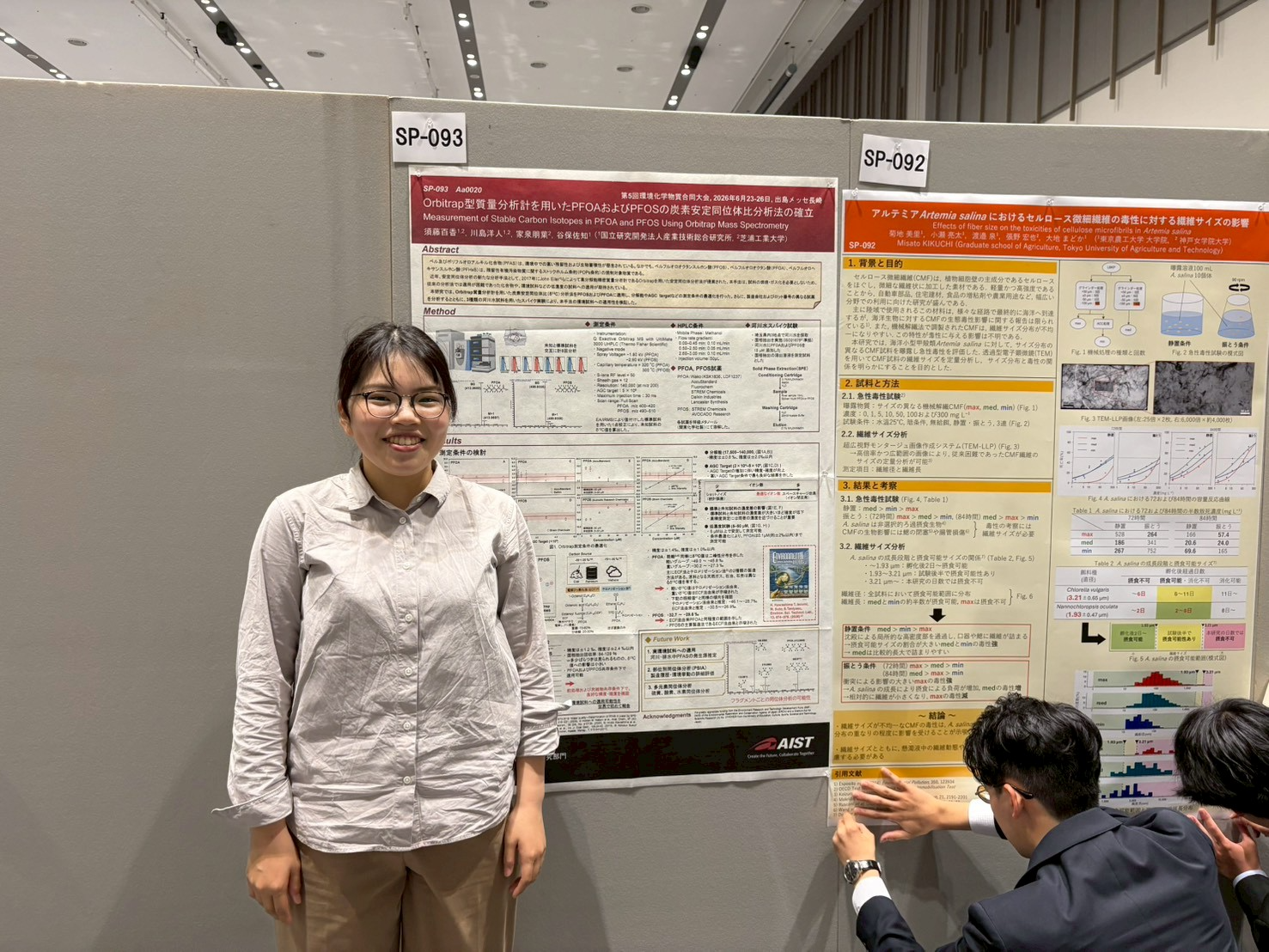
The title of my presentation was "Establishment of a Carbon Stable Isotope Ratio Analysis Method for PFOA and PFOS Using an Orbitrap Mass Spectrometer."
In this study, we demonstrated that an Orbitrap mass spectrometer enables highly precise measurements of the carbon stable isotope ratios of PFOA and PFOS, compounds that have been difficult to analyze using conventional isotope ratio mass spectrometry (IRMS). In addition, we found that commercially available PFOA standards could be classified into two distinct groups based on their carbon stable isotope ratios, suggesting that the observed differences may originate from variations in manufacturing processes or raw materials. Furthermore, through river water spiking experiments, we demonstrated for the first time the applicability of this method to real environmental samples containing complex matrices.
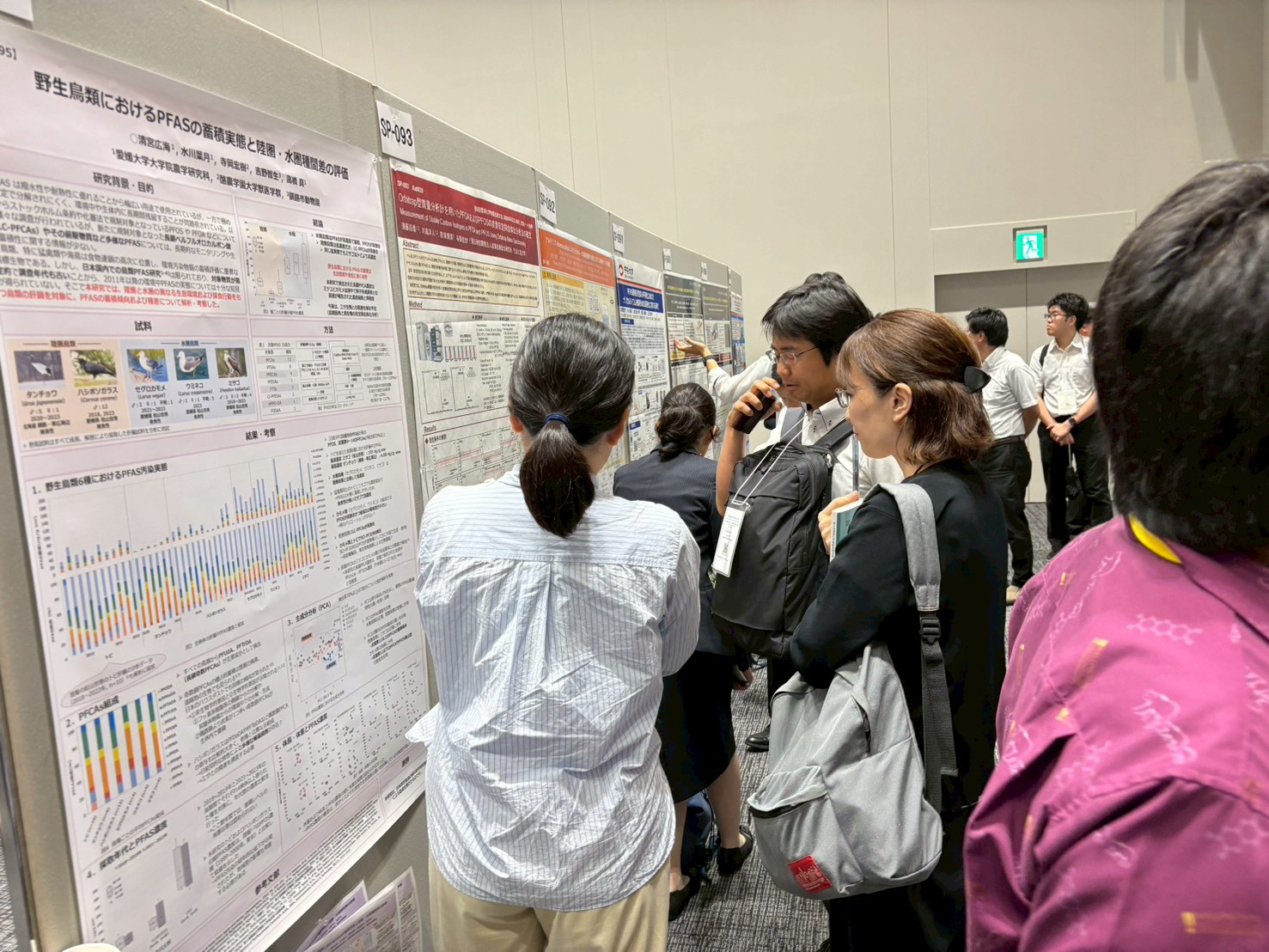
This was my first time attending a conference in the field of environmental science. Participants came not only from research institutions but also from private companies and local governments, providing a valuable opportunity to exchange ideas with people from a wide range of backgrounds. Discussions with representatives from local governments and manufacturers—groups I rarely interact with during my daily research—helped me realize the strong societal interest in identifying PFAS sources and understanding their environmental behavior.
Another memorable aspect of the conference was that many attendees came specifically to hear my presentation after learning about our research through press releases, newspaper articles, and online news coverage. In particular, I received considerable interest regarding the application of our method to real environmental samples. Encouraged by this response, I hope to further expand this research to practical environmental applications and contribute to identifying PFAS sources and clarifying their environmental fate.
Finally, I would like to express my sincere gratitude to Professor Hiroto Kawashima, Dr. Sachi Taniho (National Institute of Advanced Industrial Science and Technology, AIST), and everyone at AIST and the Shibaura Institute of Technology laboratory for their invaluable guidance and support throughout this research.
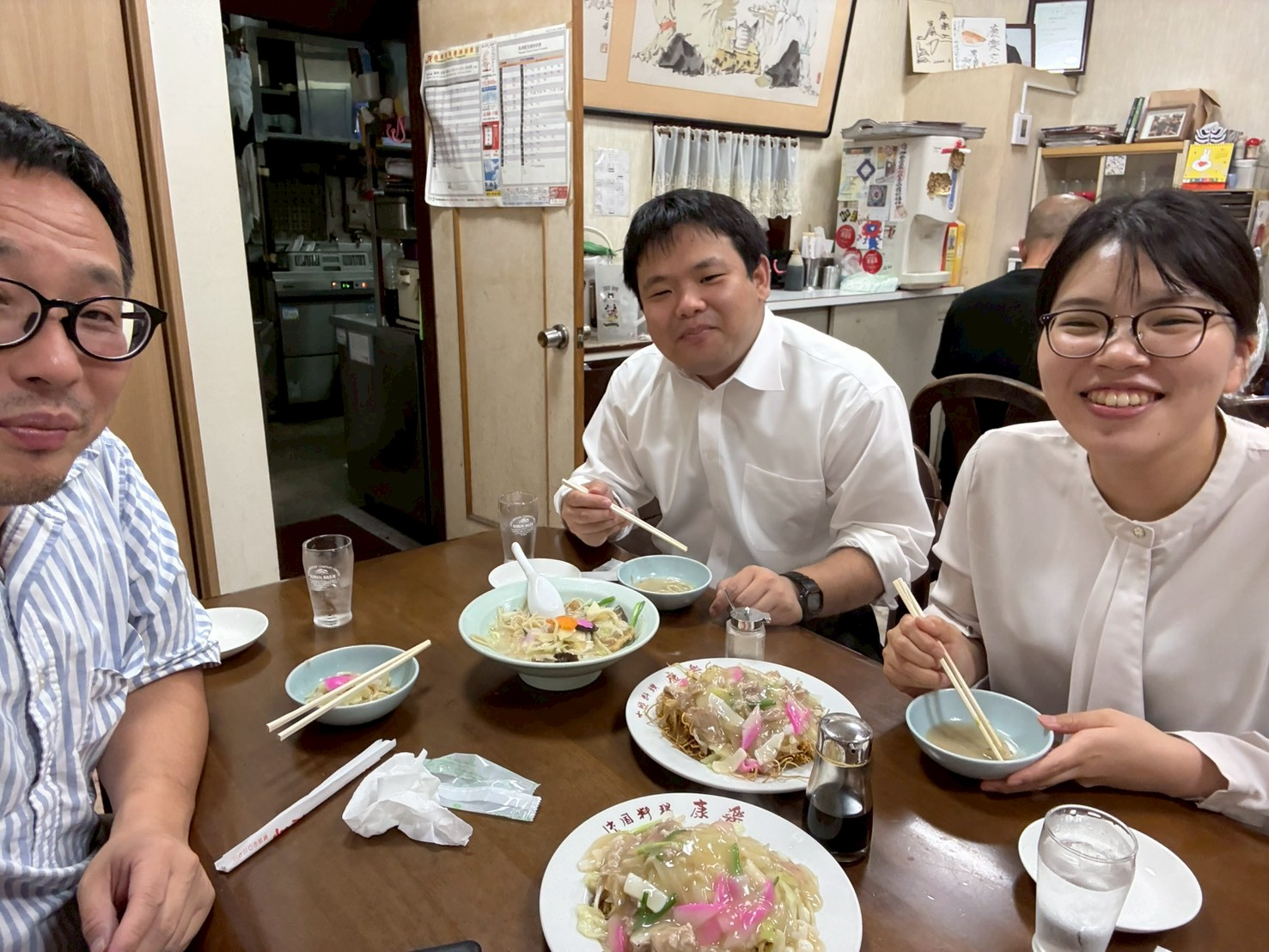
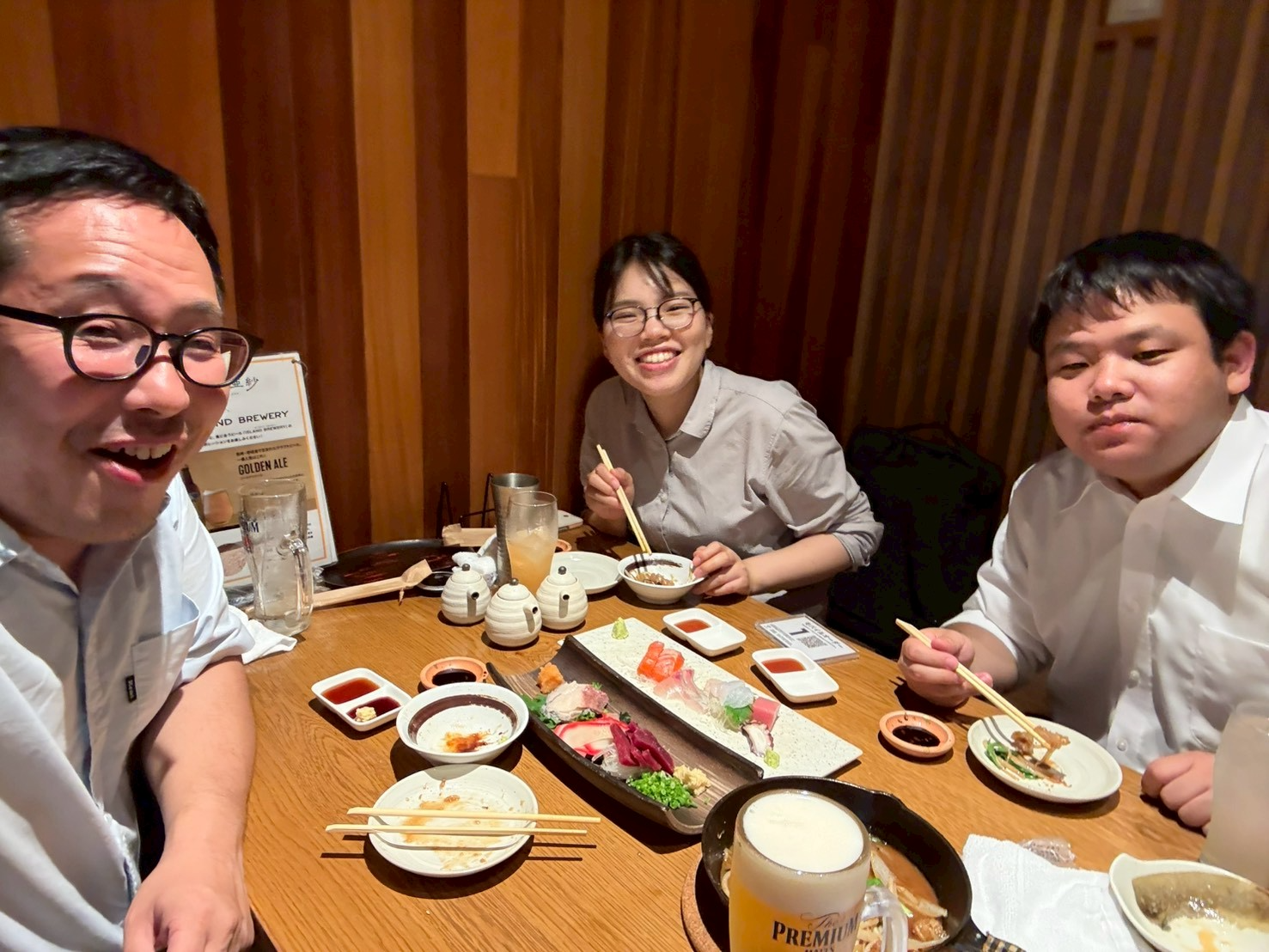
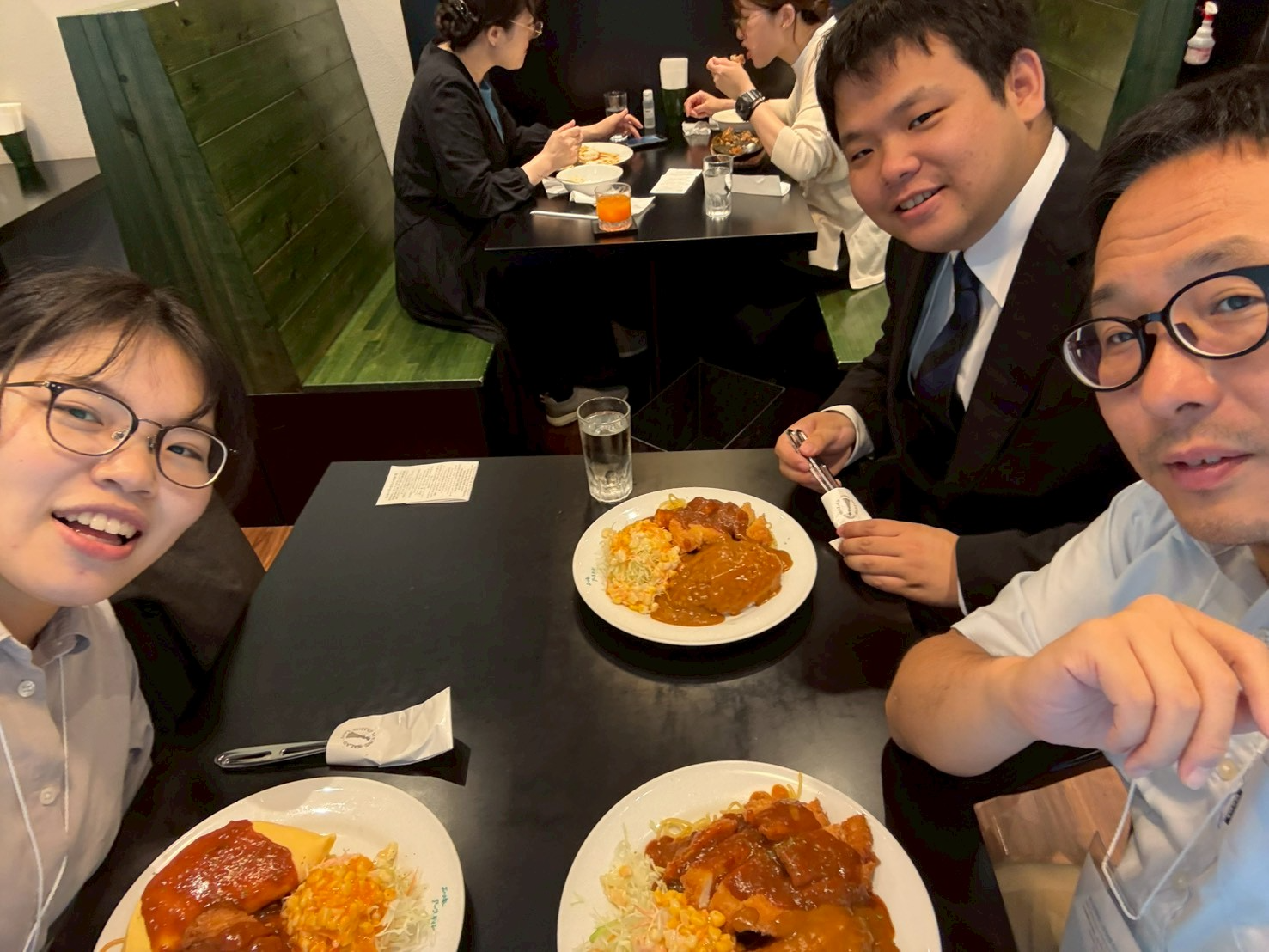
P.S. This was my first visit to Nagasaki. I was deeply impressed by its historic streetscape and thoroughly enjoyed the local cuisine during the conference. Unfortunately, it rained throughout my stay, so I hope to visit Nagasaki again under clear skies.
Comment from Sota Maehara
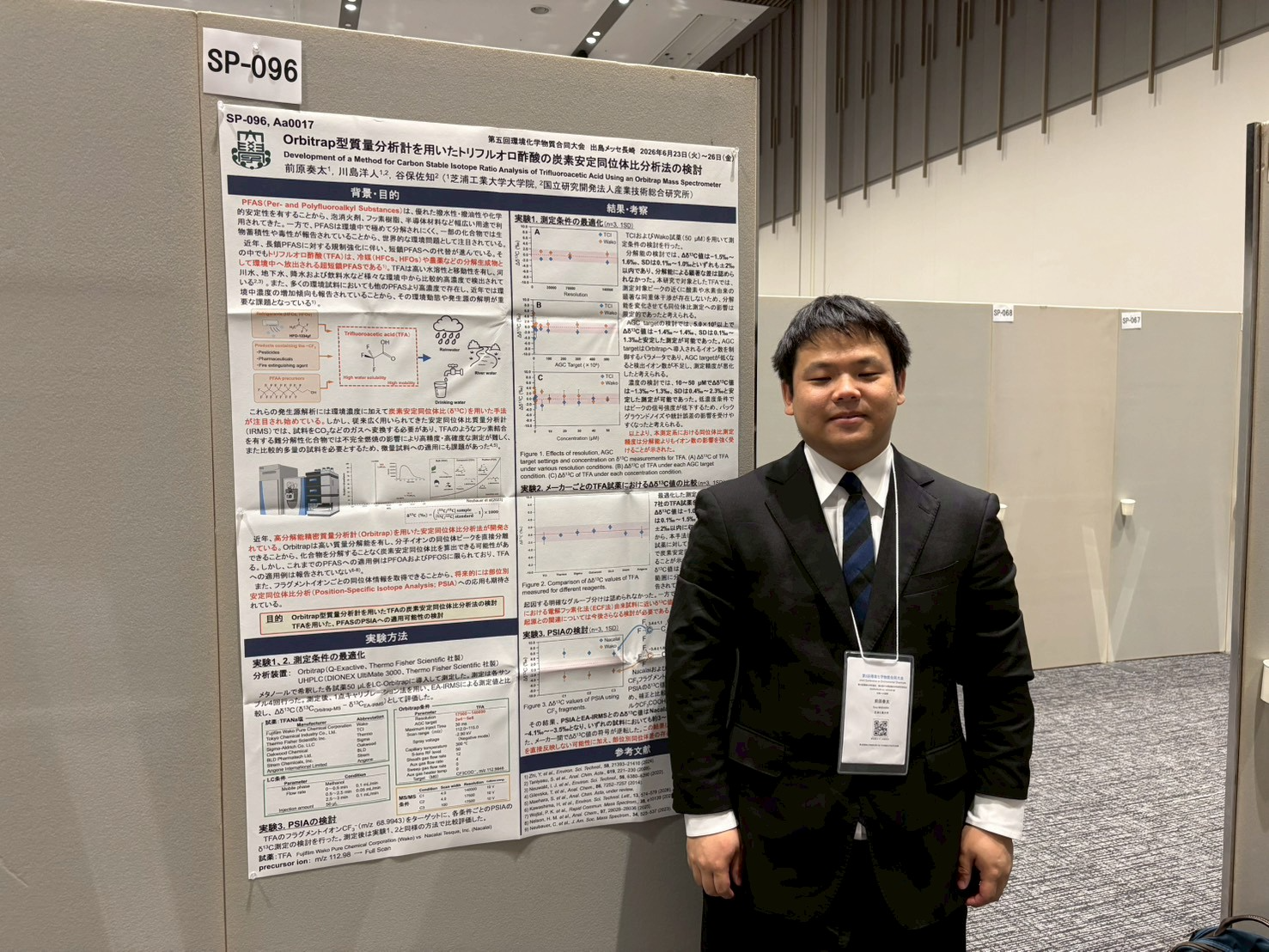
The title of my presentation was "Investigation of a Carbon Stable Isotope Ratio Analysis Method for Trifluoroacetic Acid Using an Orbitrap Mass Spectrometer."
In this study, we investigated a method for analyzing the carbon stable isotope ratio of trifluoroacetic acid (TFA) using an Orbitrap mass spectrometer. TFA has recently been detected with increasing frequency in the environment, while its sources and environmental behavior remain poorly understood.
By optimizing the analytical conditions, we established a method capable of stable carbon isotope ratio measurements. We also applied the method to TFA standards produced by several manufacturers and confirmed that accurate and precise measurements could be achieved for all of them. Furthermore, we explored the feasibility of position-specific isotope analysis (PSIA) focusing on the CF₃ moiety of the TFA molecule. Our results suggested that different carbon positions within the molecule may provide distinct isotopic information. These findings are expected to contribute to future studies aimed at identifying TFA sources and understanding its environmental fate.
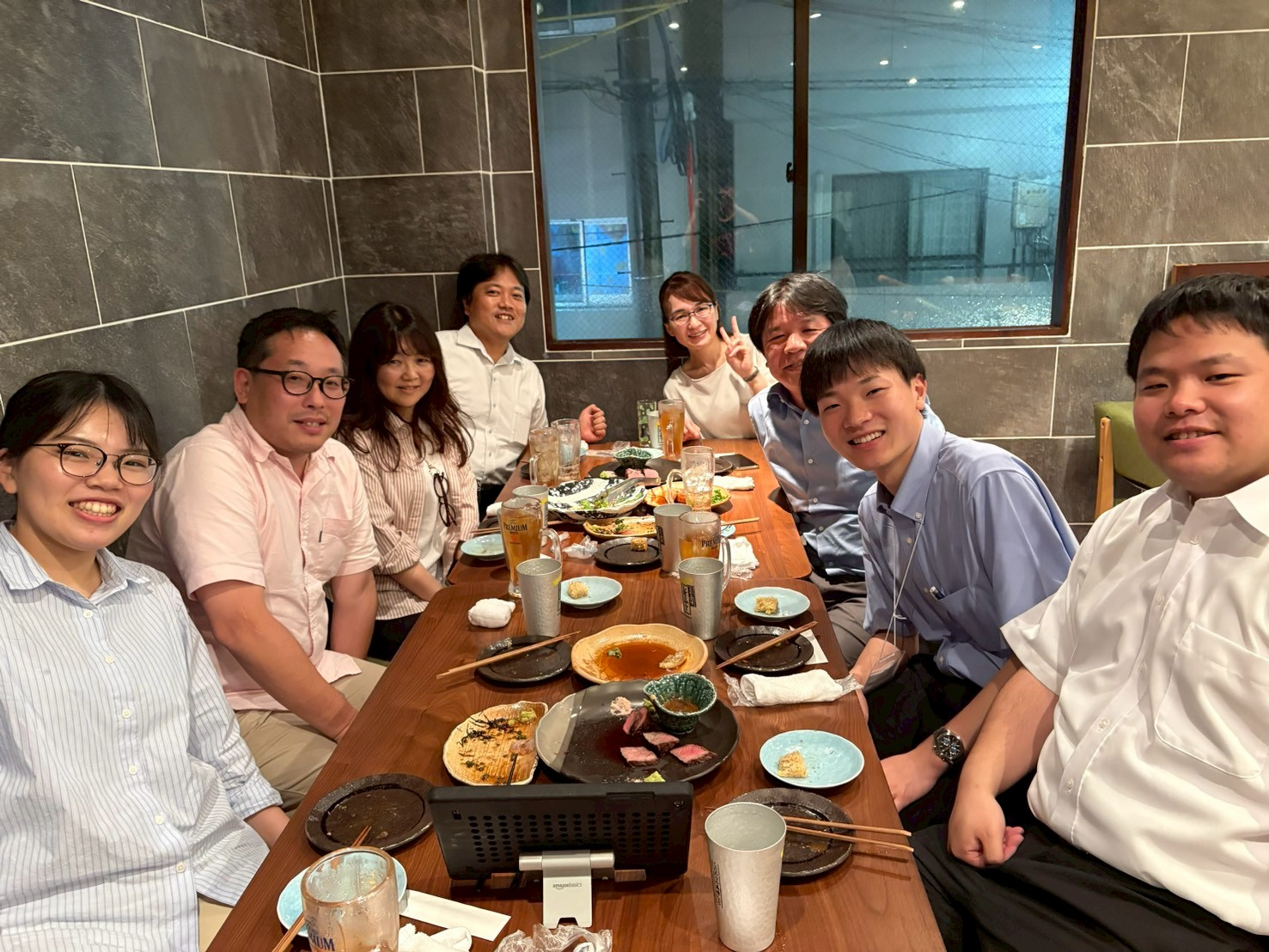
During the conference, I had the opportunity to interact with Professor Kawashima as well as many other professors and researchers. In addition to discussing research topics, I learned a great deal about the importance of maintaining a strong research mindset and the value of scientific writing.
One topic that particularly left a lasting impression was the importance of acknowledgments in research. Through conversations with the professors, I was reminded that research is made possible through the support and cooperation of many people, and that expressing gratitude to everyone involved is an essential part of the research process. Building on this experience, I hope to continue my research and contribute to identifying the sources of TFA in the environment.
Finally, I would like to express my heartfelt gratitude to Professor Hiroto Kawashima for his continuous guidance; Dr. Sachi Taniho for her valuable advice through our collaborative research; all the members of our laboratory for their daily support; Mr. Hazawa, especially for his assistance with poster preparation and printing; and Ms. Satomi Tada for her support with our research activities. I am also deeply grateful to my parents for their unwavering encouragement and support of both my graduate studies and my research.
 |  |
 |  |
 |  |
 |  |


Latest News
-
Conference2026.09.23Mugi Sawabe Presents at the 67th Annual Meeting of the Japan Society for Atmospheric Environment
-
Conference2026.09.18Mugi Sawabe Wins Best Poster Award at the 12th International Aerosol Conference (IAC 2026)
-
Paper2026.09.09Maehara's Research Published in the International Academic Journal "Analytica Chimica Acta"
Category
Archive
- 2026-9 (3)
- 2026-8 (1)
- 2026-6 (3)
- 2026-5 (1)
- 2026-4 (2)
- 2026-3 (2)
- 2026-2 (1)
- 2026-1 (1)
- 2025-9 (1)
- 2025-8 (3)
- 2025-7 (3)
- 2025-1 (1)
- 2023-1 (1)
- 2022-11 (1)
- 2022-10 (3)
- 2022-9 (1)
- 2022-8 (1)
- 2022-6 (2)
- 2022-4 (1)
- 2022-3 (1)
- 2022-2 (2)
- 2021-10 (1)
- 2021-9 (2)
- 2021-8 (1)
- 2021-5 (1)
- 2021-4 (1)
- 2021-3 (2)
- 2021-1 (1)
- 2020-10 (2)
- 2020-8 (1)
- 2020-7 (1)
- 2020-6 (1)
- 2020-5 (1)