News
Presentations at the SETAC Asia-Pacific 15th Biennial Meeting (Tsukuba)
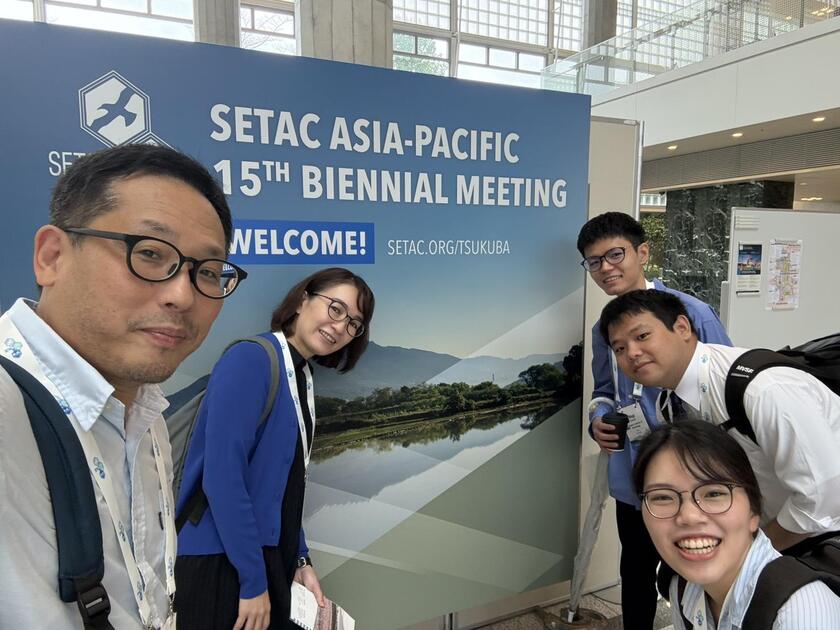
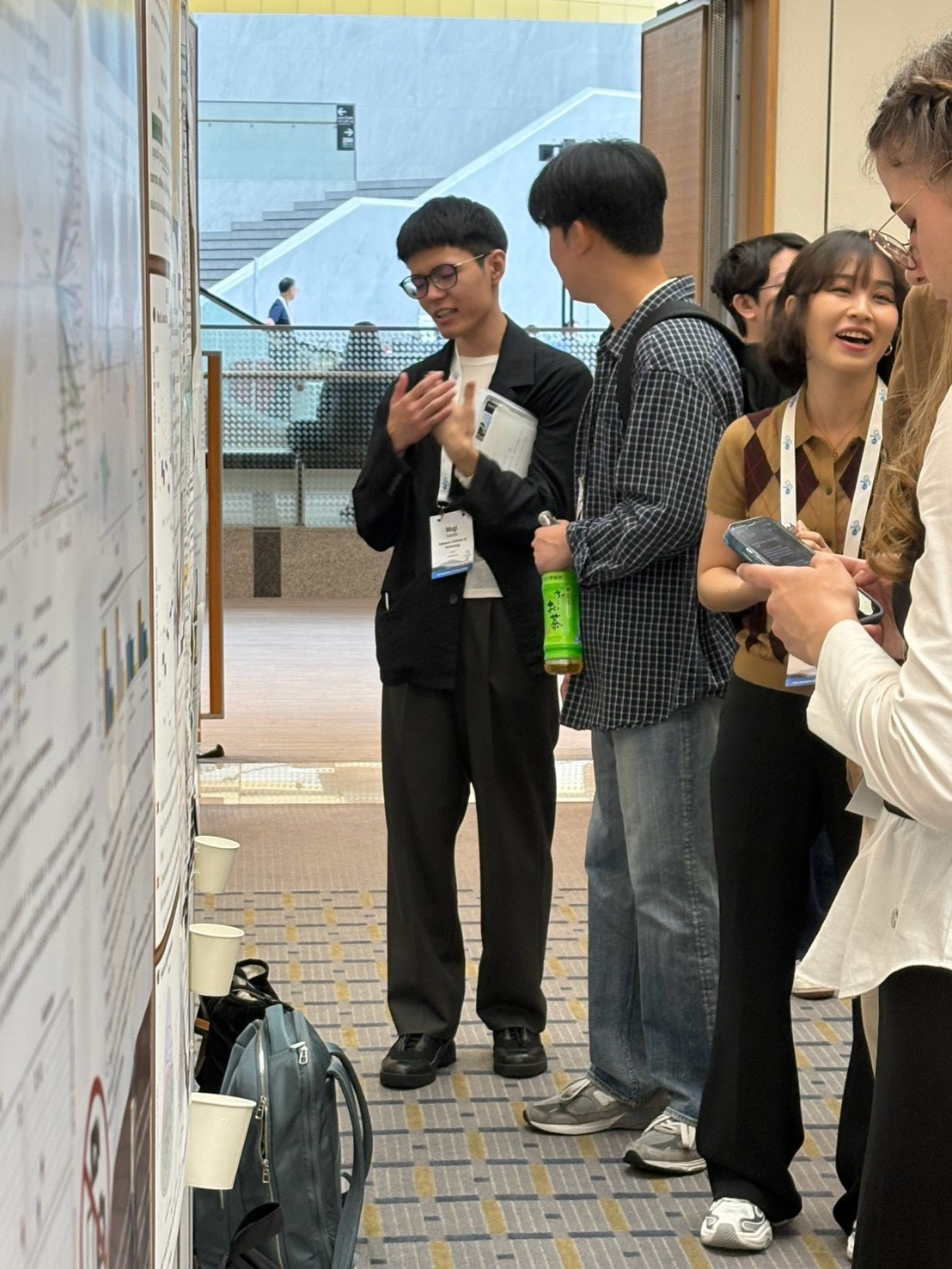
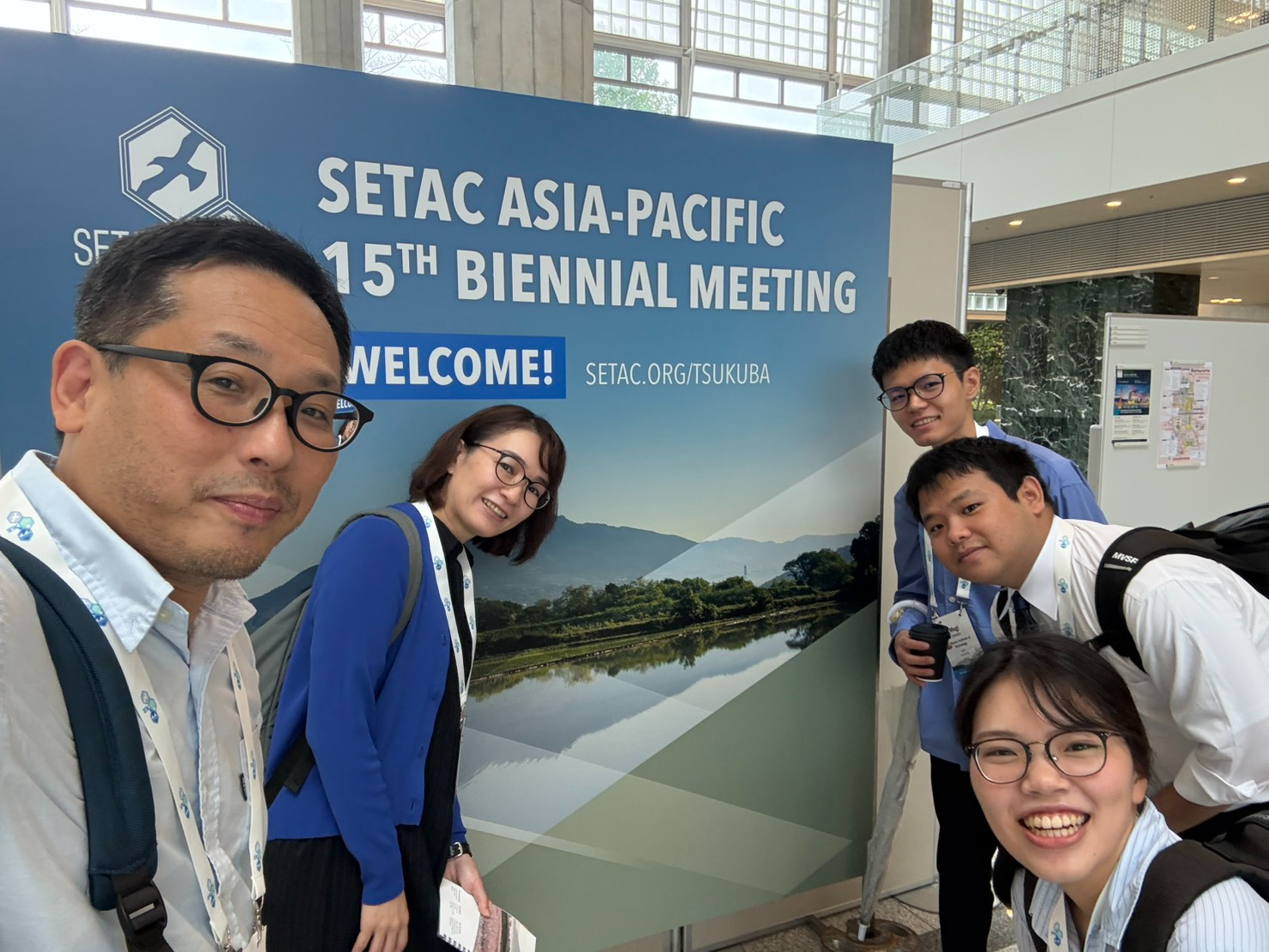
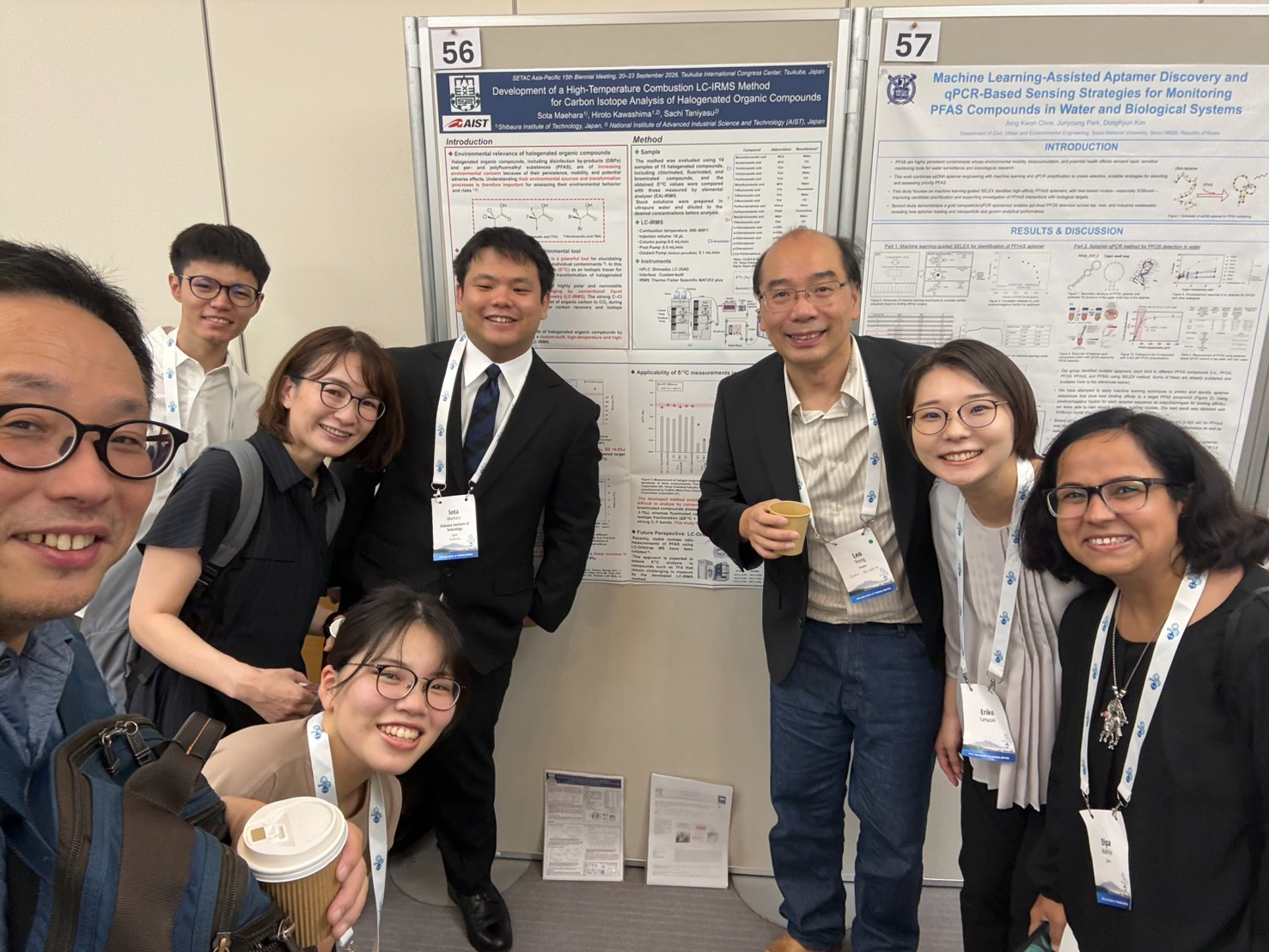
Doctoral student Momoka Suto and master’s students Sota Maehara and Mugi Sawabe presented their research at the SETAC Asia-Pacific 15th Biennial Meeting, held at the Tsukuba International Congress Center from September 21 to 23, 2026. Ms. Suto gave an oral presentation. Mr. Maehara presented a poster and, because he was selected for the Spotlight Session, also gave a short oral talk. Mr. Sawabe presented a poster. At the meeting, we also had the chance to meet and talk with members of Dr. Sachi Taniyasu’s team and other research partners.
★ Comments from Momoka Suto
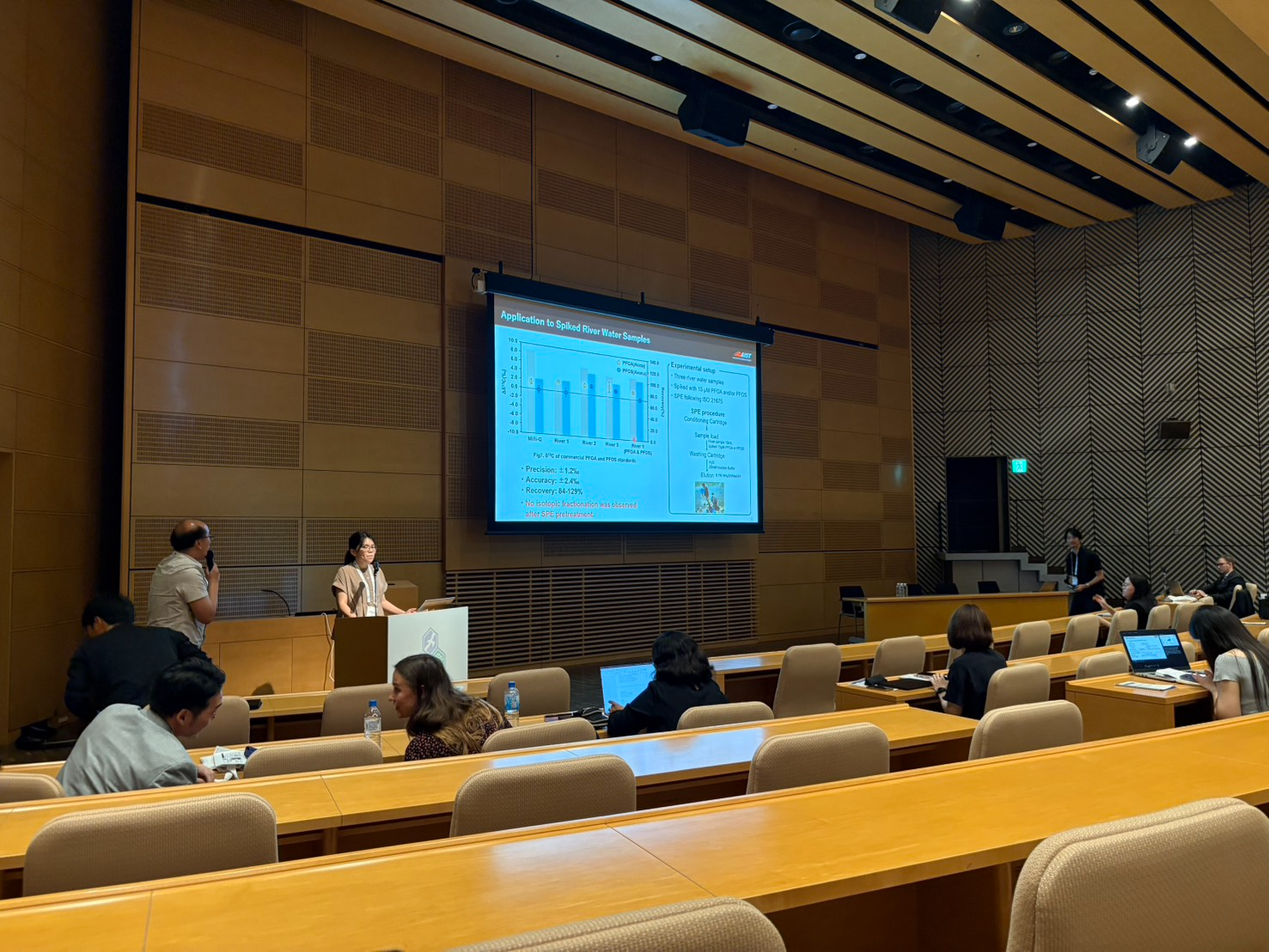
My presentation was titled “Optimization of Stable Carbon Isotope Ratios of PFOA and PFOS Using High-Resolution Mass Spectrometry.”
This was my first oral presentation at an international conference. Members of the National Institute of Advanced Industrial Science and Technology (AIST) and of our laboratory at Shibaura Institute of Technology helped me rehearse many times, and thanks to them the presentation went well. Presenting at an international conference and discussing my work with researchers from Japan and abroad was a very valuable experience for me.
Many presentations at the meeting dealt with PFAS contamination and regulatory trends in different countries, especially in Asia. They reminded me that PFAS is a global environmental problem. I also learned a great deal about how the extent of PFAS contamination and the state of regulation differ from country to country and region to region.
Finally, I would like to thank Prof. Hiroto Kawashima and Dr. Sachi Taniyasu (AIST) for their guidance on this research, as well as everyone at AIST and in our laboratory at Shibaura Institute of Technology.
★ Comments from Sota Maehara
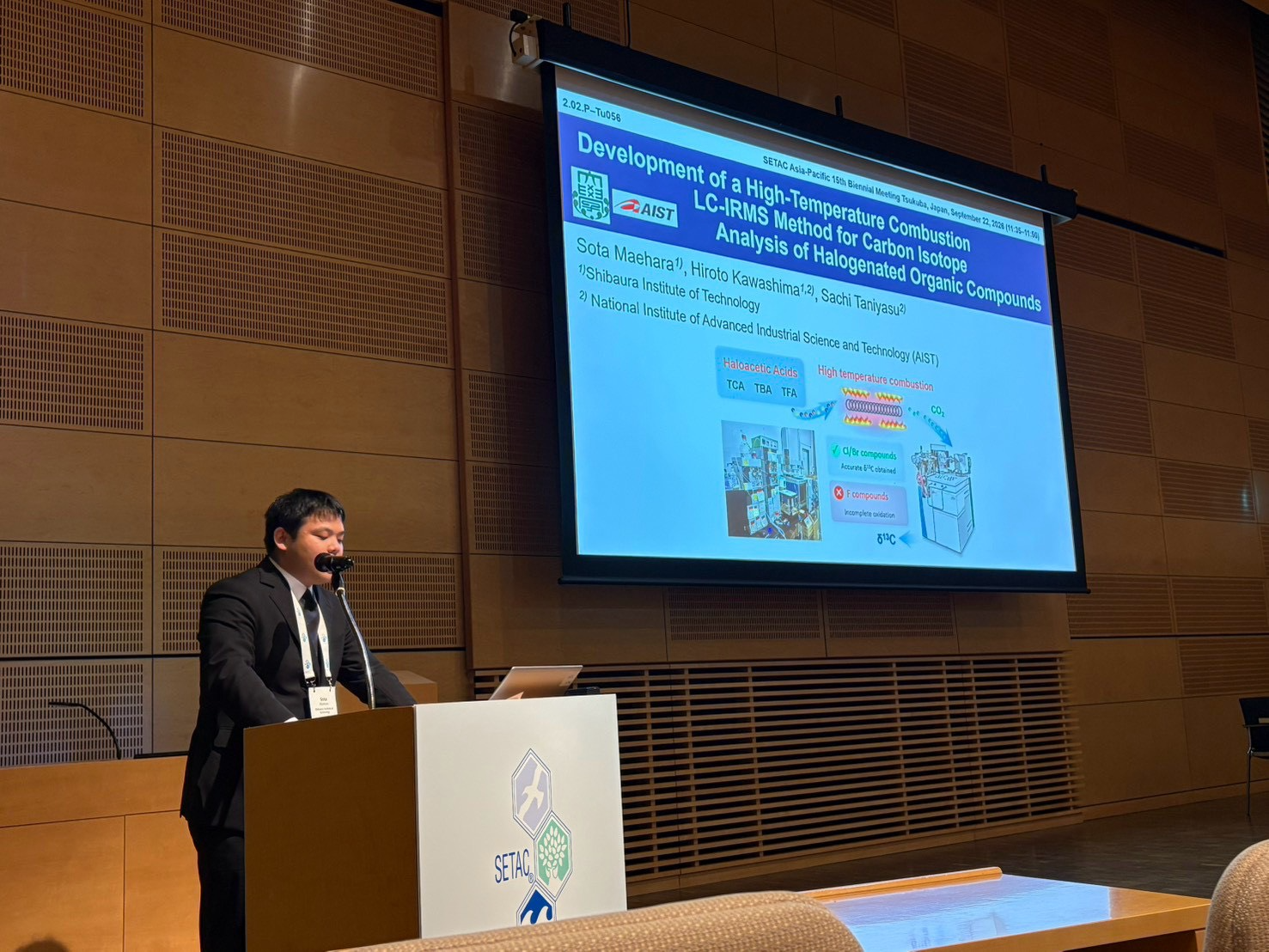
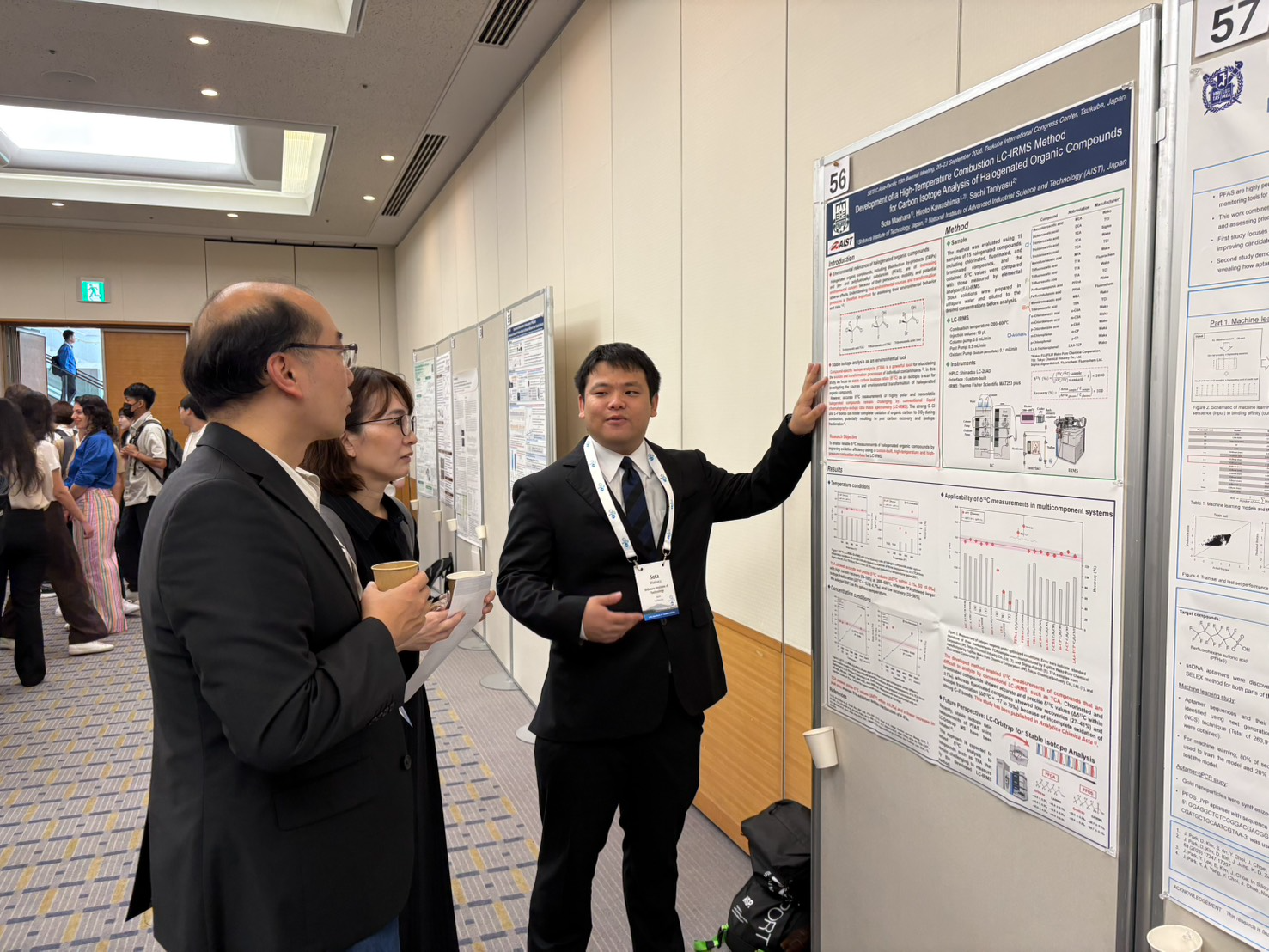
My presentation was titled “Development of a High-Temperature Combustion LC-IRMS Method for Carbon Isotope Analysis of Halogenated Organic Compounds.” Conventional LC-IRMS has had difficulty measuring the stable carbon isotope ratios (δ13C) of halogenated organic compounds accurately. In this study, I developed a measurement method that uses our own combustion interface, which can operate at high temperature and high pressure. The method gave good precision for chlorinated and brominated compounds. However, it also showed a problem with fluorinated compounds, including PFAS: they are hard to oxidize completely, which causes isotope fractionation. Next, I plan to develop a new stable isotope analysis method using LC-Orbitrap mass spectrometry and apply it to PFAS such as TFA, which are difficult to measure with conventional methods.
At this meeting, in addition to my poster, I took part in the Spotlight Session, which involved a five-minute oral presentation. When I realized this just three days before the meeting, it was the biggest panic I’ve had all year! I had to prepare both my poster and my slides entirely in English, and rehearsing for both meant I was immersed in English every day. That turned out to be a very good experience. There were also many presentations on PFAS at the meeting. They showed me that the topic I am working on is considered important around the world, and that has motivated me even more in my research. This was my first international conference, and I also found it very interesting to get a sense of other countries’ cultures and atmospheres through the presentations and conversations with researchers from many countries.
Last but not least, I would like to express my sincere gratitude to Prof. Hiroto Kawashima for his guidance, to Dr. Sachi Taniyasu for her valuable advice through our joint research, and to all members of the laboratory who support my research every day. I especially thank Mr. Hazawa and Mr. Kim, who regularly discuss research with me and helped me practice for this presentation, and our research assistant, Ms. Satomi Tada, who supports our daily research activities. Since the venue was in Tsukuba, I would also like to thank my parents for driving me there and back.
★ Comments from Mugi Sawabe
My presentation was titled “Source Identification of Ammonium of PM2.5 in Bangladesh Using Nitrogen Stable Isotope Ratios.” Ammonia (NH₃) in PM2.5 comes from agricultural fertilizers and waste. In urban areas of developing countries, vehicle exhaust and open burning are also suspected sources. In this study, I measured the nitrogen stable isotope ratios (δ¹⁵N) of ammonium ions in PM2.5 collected in Dhaka, the capital of Bangladesh, which has some of the worst air pollution in the world. I analyzed the data by season to estimate the contributions of different emission sources quantitatively. The results showed that, on an annual average, 38.5% of NH₃ emissions came from biomass burning and vehicle exhaust. From around March to May, these sources accounted for more than half of the total. Considering the local situation, I believe measures against open burning of agricultural residues and waste, along with a shift to vehicles with lower environmental impact, are needed.
This was my third poster presentation this month, and I am starting to understand how to explain my work to visitors in a compact, clear order. By first giving some background information and then adjusting how much I said based on each listener’s reactions, I was able to have discussions with five people in less than an hour. Preparing the poster also helped me sort out which points I wanted to emphasize, and it showed me how important it is to review the experimental procedures and results again and again.
PFAS was a major topic across the whole meeting, which showed me how widely it is a concern around the world. It also confirmed for me that it is worthwhile for our laboratory to keep exploring analytical methods based on stable isotope ratios.
I would like to sincerely thank Prof. Kawashima for his everyday guidance, and everyone at the University of Dhaka for their collaboration on this research.
 |  |
 |  |
 |  |


Latest News
Category
Archive
- 2026-11 (2)
- 2026-9 (4)
- 2026-8 (1)
- 2026-6 (3)
- 2026-5 (1)
- 2026-4 (2)
- 2026-3 (2)
- 2026-2 (1)
- 2026-1 (1)
- 2025-9 (1)
- 2025-8 (3)
- 2025-7 (3)
- 2025-1 (1)
- 2023-1 (1)
- 2022-11 (1)
- 2022-10 (3)
- 2022-9 (1)
- 2022-8 (1)
- 2022-6 (2)
- 2022-4 (1)
- 2022-3 (1)
- 2022-2 (2)
- 2021-10 (1)
- 2021-9 (2)
- 2021-8 (1)
- 2021-5 (1)
- 2021-4 (1)
- 2021-3 (2)
- 2021-1 (1)
- 2020-10 (2)
- 2020-8 (1)
- 2020-7 (1)
- 2020-6 (1)
- 2020-5 (1)