News
Presentation at the International Nitrogen Conference 2026 (N2026)
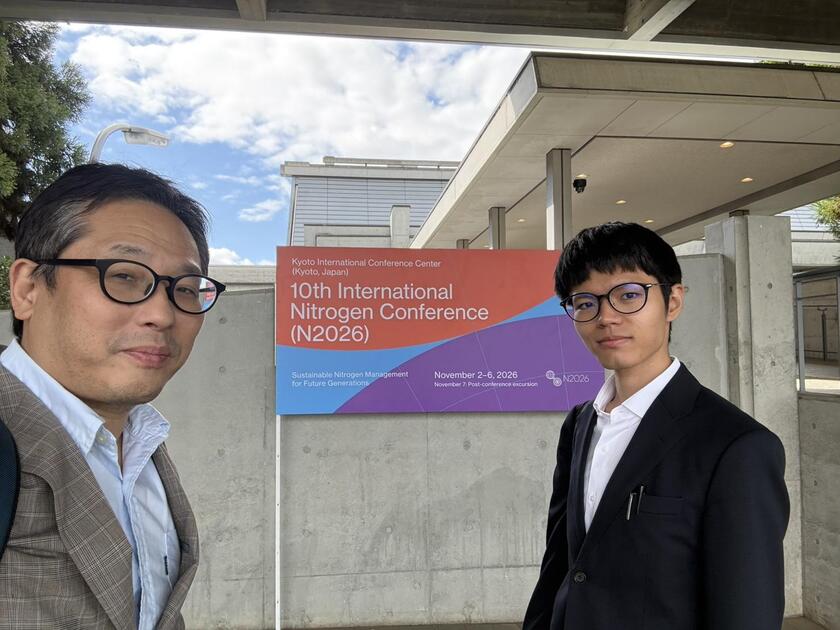
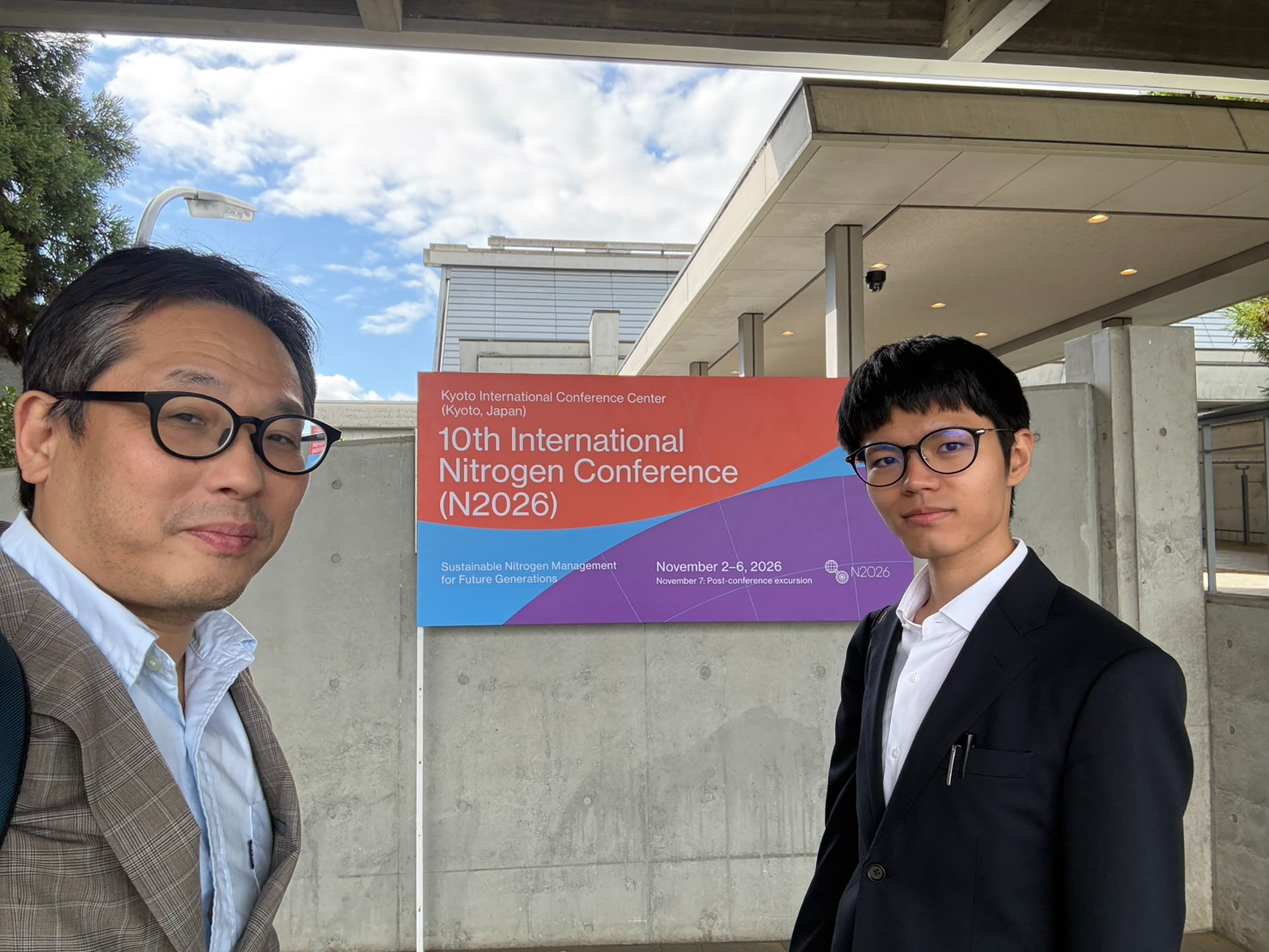
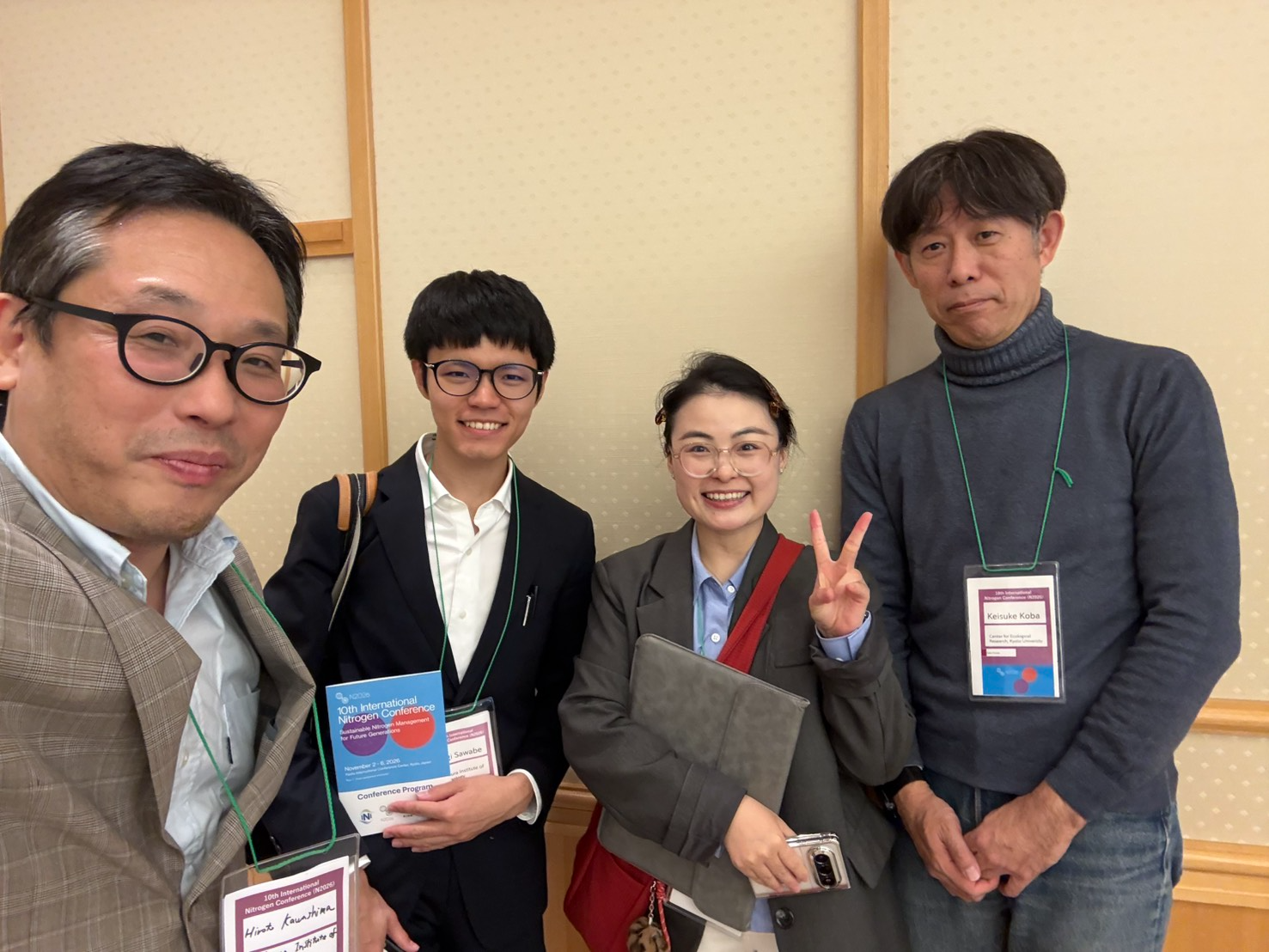
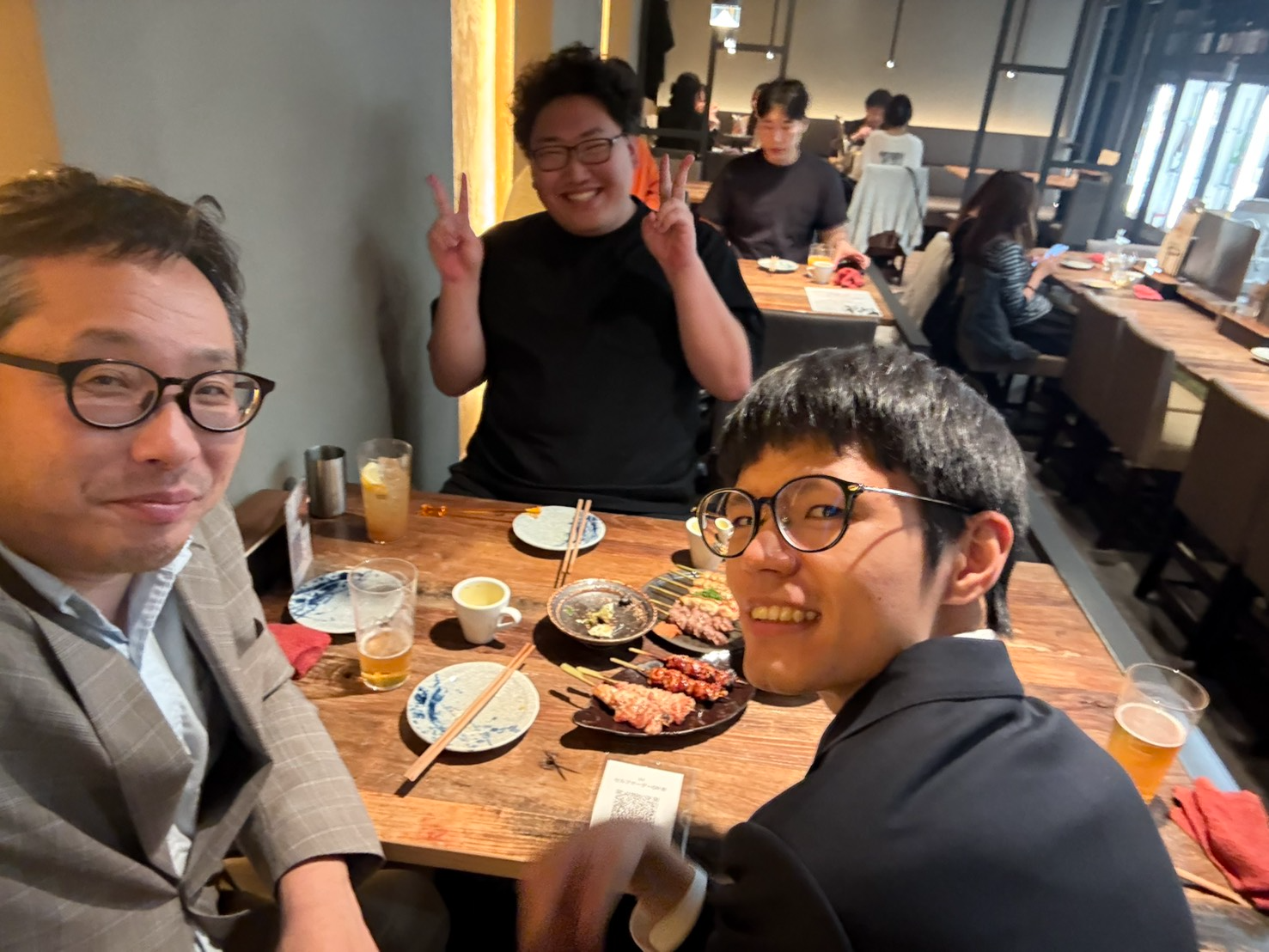
Master’s student Mugi Sawabe presented his research at the International Nitrogen Conference 2026 (N2026), held in early November 2026. At the conference, we were able to talk with Prof. Keisuke Koba of Kyoto University, his postdoctoral researchers, and others. We also got to catch up with Mr. Komoto, who graduated from our laboratory in March 2025 and now teaches at a junior high school in Kyoto City. It was great to see him again after so long.
★ Comments from Mugi Sawabe
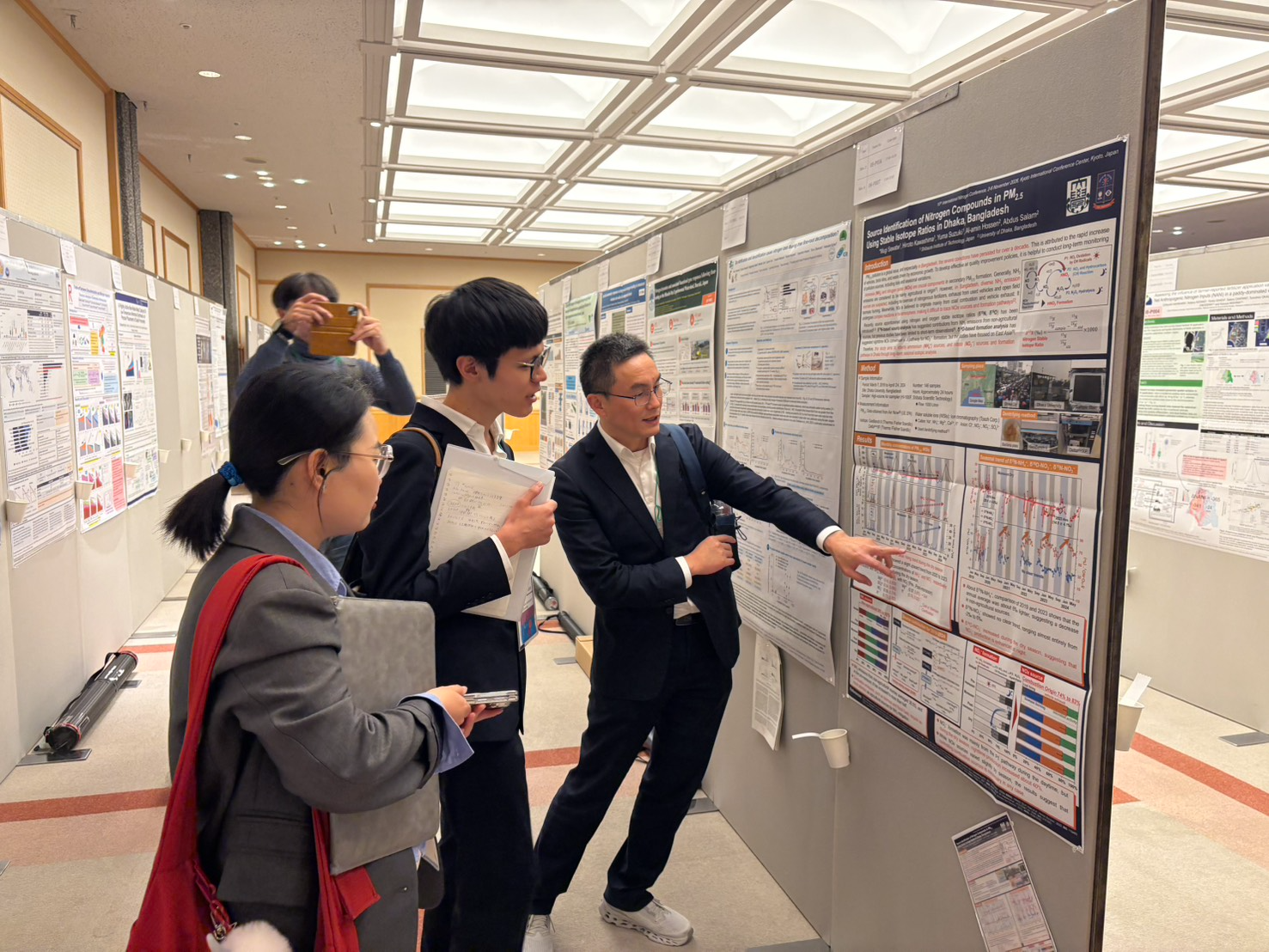
My presentation was titled “Source Identification of Nitrogen Compounds in PM2.5 Using Stable Isotope Ratios in Dhaka, Bangladesh.” PM2.5 contains many carbon, nitrogen, and sulfur compounds, so to improve air quality we need to identify the sources of each of these substances. Ammonium (NH₄⁺) and nitrate (NO₃⁻) come from a wide range of sources, from natural to combustion-related. Nitrate in particular forms through complex reactions in the atmosphere, so its origins have not been studied enough. In this study, I used ion concentrations and stable isotope ratios to analyze how NH₄⁺ and NO₃⁻ behave in the environment of Dhaka, the capital of Bangladesh, which has some of the most severe PM2.5 pollution in the world. Analyzing five years of long-term data showed that dry-season concentrations of both NH₄⁺ and NO₃⁻ increased several-fold between 2022 and 2024. NH₄⁺ is generally thought to come mostly from agriculture. However, the isotope analysis showed that in Dhaka, about 30–50% of it each year comes from non-agricultural sources such as open burning. NO₃⁻ formed mainly during the daytime, but nighttime formation increased during the dry season. In every season, more than 70% of NO₃⁻ came from combustion.
Apart from my master’s thesis defense, this was my last chance to present my research. The poster brought together everything I have worked on so far, and I was able to practice the presentation thoroughly. Because the conference was held in Japan, in Kyoto, many of the researchers there were Japanese, so I did not speak much English. Still, all that preparation paid off, and the presentation went smoothly. Some of the visitors will be working with our laboratory in the future, and I was glad when they told me my presentation was easy to understand. I also happened to run into a friend from another university whom I met at last year’s Annual Meeting of the Japan Society for Atmospheric Environment. We went for a walk and talked about all sorts of things, which was a lot of fun.
As the name “Nitrogen Conference” suggests, there were many presentations on ammonia and nitrate. Even though it was my first time attending, I felt somehow at home. Only a few presentations used stable isotopes, but I learned a lot from a talk by a doctoral researcher from Hokkaido University. I couldn’t help approaching him after his talk, and I am very grateful that he took the time to explain his research to me in detail. There were also presentations by high school students, a team that has been measuring ammonia in environmental samples over an even longer period than we have, and I got to meet a professor who gave me advice at another conference recently. It was a stimulating and rewarding conference, and I am truly glad I took part.
Finally, I would like to express my heartfelt gratitude to Prof. Kawashima, who has guided me so carefully before every conference, even when I caused him extra work; to everyone at the University of Dhaka for our many years of collaboration; to the junior lab member who contributed greatly to the nitrate analysis; to all the members of our laboratory who support my research every day; and to my parents, who have always warmly supported me throughout my university life.
 |  |
 |  |


Latest News
Category
Archive
- 2026-11 (2)
- 2026-9 (4)
- 2026-8 (1)
- 2026-6 (3)
- 2026-5 (1)
- 2026-4 (2)
- 2026-3 (2)
- 2026-2 (1)
- 2026-1 (1)
- 2025-9 (1)
- 2025-8 (3)
- 2025-7 (3)
- 2025-1 (1)
- 2023-1 (1)
- 2022-11 (1)
- 2022-10 (3)
- 2022-9 (1)
- 2022-8 (1)
- 2022-6 (2)
- 2022-4 (1)
- 2022-3 (1)
- 2022-2 (2)
- 2021-10 (1)
- 2021-9 (2)
- 2021-8 (1)
- 2021-5 (1)
- 2021-4 (1)
- 2021-3 (2)
- 2021-1 (1)
- 2020-10 (2)
- 2020-8 (1)
- 2020-7 (1)
- 2020-6 (1)
- 2020-5 (1)